
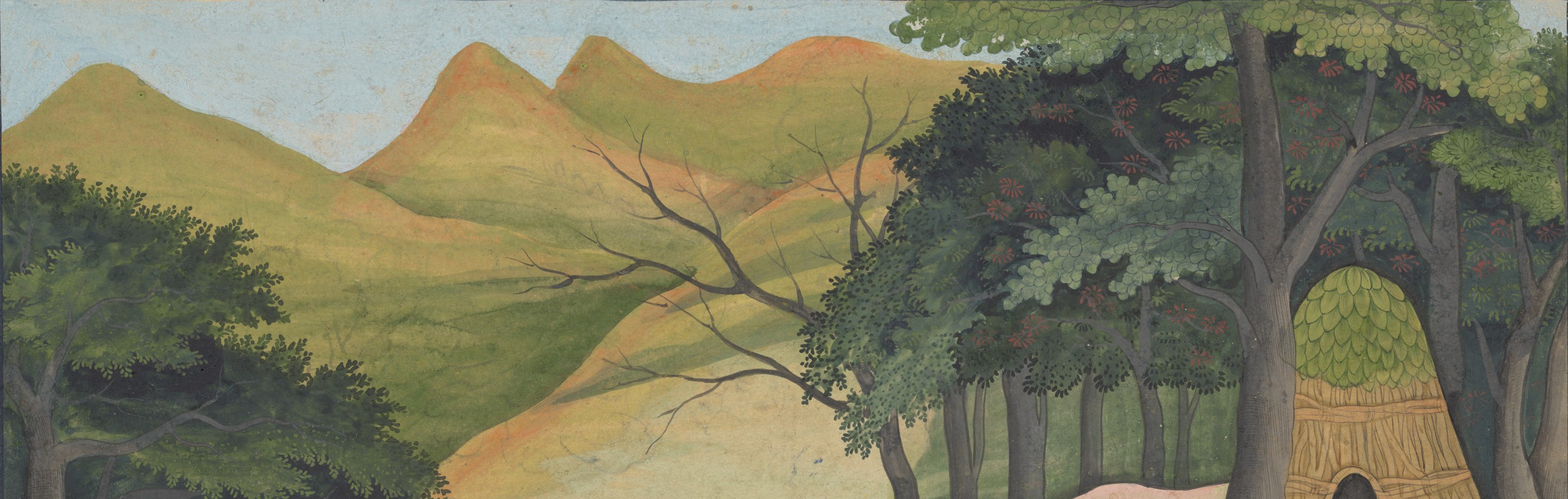
A landscape painting of distant mountains with an ascetic's hut set in a forest.

Resources for a better understanding.

With more and more academic research about yoga being published, finding good sources of information online is increasingly important. A group of scholars looking at yoga and based in the social sciences and humanities have therefore got together to develop a web-based resource for those interested in this field.

This initiative is run by a group of established scholars who conduct research on yoga which formed at the Yoga Darśana, Yoga Sādhana international yoga conference in Kraków, Poland in May 2022. Their aim is to develop a website that offers information about the best quality yoga-related research in the humanities and social sciences.

The 4th International Yoga Darśana Yoga Sādhana conference:
Authenticity, Authority and Adaptation

27-29 May 2026
Paris, France

Programme Announcement

The 4th International Yoga Darśana Yoga Sādhana conference will take place in Paris beginning Wednesday May 27 at 1:00 p.m. with official proceedings ending at 6:00 p.m. Friday evening May 29, 2026. The events are being organized in collaboration with the Center for South Asian and Himalayan Studies (CESAH) at the School for Advanced Social Sciences (EHESS – École de hautes études en sciences sociales) in Paris.

Latest Reflection

  • Interview with Suzanne Newcombe and Raphaël Voix

    The 4th Yoga Darśana Yoga Sādhana Conference The 4th International Yoga Darśana Yoga Sādhana Conference convenes 27–29 May 2026 at EHESS Paris, organized by CESAH. Theme: Authenticity, Authority and Adaptation—examining how yoga traditions establish legitimacy, transmit knowledge, and negotiate transformation across time and place. Bridges philological and ethnographic approaches.  Host: Raj Balkaran Guest: Suzanne Newcombe and Raphael Voix Date: 9th March 2026

Yoga Research Mailing List

list@yogaresearch.org is a new email discussion group providing a forum for academic discussion among professional scholars of Yoga Studies.

Membership of the list is mainly open to scholars with an advanced degree and whose primary field is yoga studies. Sending a short academic CV is a requirement for approval.

Find out more about the list and how to join.

A painting of a tiger in a forest

Featured Researcher Profile

  • A profile photo of Prof. Shaman Hatley Prof. Shaman Hatley

    Shaman Hatley is an associate professor of Asian Studies and Religious Studies at the University of Massachusetts Boston, and chair of the Asian Studies Department. He studied Indology and Religious Studies at the University of Pennsylvania under the direction of Harunaga Isaacson, completing his doctoral thesis in 2007 and then teaching at Concordia University until 2015. His research is primarily in the areas of Śaiva tantric traditions in the early medieval period, goddess cults, and the history of yoga.   One of Hatley’s ongoing subjects of research is the Brahmayāmala (650–750 c.e.), the earliest surviving large-scale tantra (scripture) devoted to goddess worship. He published one volume of studies, critical editions, and translations in 2018 and is preparing another, as well as a companion monograph on tantric yoginī cults in early-medieval India. Since 2010, Hatley has contributed to the Tāntrikābhidhānakośa. Dictionnaire des terms techniques de la littérature hindoue tantrique (A Dictionary of Technical Terms from Hindu Tantric Literature), published by the Austrian Academy of Sciences. One current project, funded by the National Endowment for the Humanities, is a critical edition, translation and study of The Wish-fulfilling Gem of Yoga (Yogacintāmaṇi) of Śivānanda Sarasvatī (fl. circa 1600), in collaboration with James Mallinson (Oxford) and Jason Birch (SOAS University of London). Śivānanda’s compendium (nibandha) represents an early and influential endeavor to integrate Patañjali’s ‘classical’ yoga and its rich commentarial tradition with the corpus of second-millennium texts teaching the body-centered practice of Haṭha Yoga. As such, the text offers a unique window into the philosophy and practice of yoga in the early modern era, at the height of the Mughal empire and on the eve of colonialism. Hatley’s most recent work concerns the history of the ‘tantric body’: its sources, key principles, and historical transformations. At the heart of the project is a genealogy of the tantric cakras (wheels) and kuṇḍalinī (the serpentine vital force believed to ascend through the body in yoga). Select publications 2025 (forthcoming). “The Wheel of the Navel and Lotus of the Heart: Metaphor, Medical Knowledge, and the Body of Early Yoga.” Journal of Yoga Studies. 2020. “The Lotus Garland (padmamālā) and Cord of Power (śaktitantu): the Brahmayāmala’s Integration of Inner and Outer Ritual.” In Śaivism and the Tantric Traditions: Essays in Honour of Alexis Sanderson, ed. by Dominic Goodall, Shaman Hatley, Harunaga Isaacson, & Srilata Raman. Gonda Indological Studies, no. 22. Leiden: Brill. https://doi.org/10.1163/9789004432802_018. 2018. The Brahmayāmalatantra or Picumata, Volume I: Chapters 1–2, 39–40, & 83. Revelation, Ritual, and Material Culture in an Early Śaiva Tantra. Collection Indologie, no. 133 (Early Tantra Series, no. 5). Pondicherry: Institut Français d’Indologie/École française d’Extrême-Orient/Universität Hamburg. 2007. “Mapping the Esoteric Body in the Islamic Yoga of Bengal.” History of Religions 46: 351–68.

Scroll to Top